“El materialismo formal de Deleuze o el arte de lo material”, según la filósofa Lourdes Flamarique

Lourdes Flamarique, filósofa y profesora titular de la Universidad de Navarra, ha ocupado la tercera sesión del III Seminario de Teoría del Arte «Nuevos materialismos y otras perspectivas teóricas afines» el pasado viernes 15 de abril en el Campus de la Dehesa de la Villa.

Especializada en las corrientes actuales de la filosofía, Flamarique es  autora de ensayos como El arte como hermenéutica de sí mismo. Sobre la modernidad del arte, entre otras muchas publicaciones,  y editora de  Las raíces de la ética y el diálogo interdisciplinar.

Su charla sobre “El materialismo formal de Deleuze o el arte de lo material”, la filosofa  se centró en el último libro de Gilles Deleuze y Félix Guattari ¿Qué es la filosofía?, exponiendo el pensamiento de Deleuze y su planteamiento epistemológico en relación con el arte.  Dicha sesión finalizó con un debate entre los asistentes y la filósofa.

Engineering Life

Bio_London_700x390

Mon, Apr 25 at 6:30pm – 9pm.

Lights of Soho. 35 Brewer Street. City of London, United Kingdom


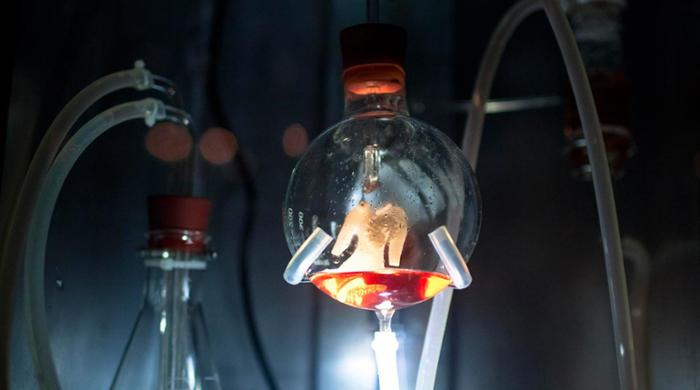
Life is being altered and designed by artists, scientists and technologists. Through applying engineering principles to living systems, biology has become a new material for creativity. But these practices and manipulations now challenge our understanding of life and what it means to be alive.

There are various ways in which life is being engineered: Techniques such as tissue culture allows for the growth of cells and organism in an artificial environments. Meanwhile synthetic biology allows for designers to programme material, creating new organisms that might be used for radical purposes such as in architecture, conducting electricity or emitting light. In addition, platforms such as CRISPR/Cas9 provide an increasingly inexpensive and versatile way to make changes to the genome.

Many of these biotechnologies have captured the imagination of the public and have led to assertions that we might soon be able to build or grow replacement organs. As such new new emphasis has been placed on definitions of ‘life’ that emerges through the lens of science. Which requires us to questions what might be done to life through the use of these new technologies.

What does it mean to be able to build with life? What are the philosophical and ethical issues that arise from these new approaches? What boundaries are crossed between science and design when we engage with these forms of manipulation? What are the implications of presenting living-art in this context? Where are the new boundaries between life and non-life? How are these technologies changing our understanding what it means to be alive and living?

This panel discussion will explore who gets to use life as material and to what end.

Read more

Unlock Hause: un proyecto de comisariado de Alba Soto y Pia Cruzalegui en Chicago

Alba Soto inaugura un proyecto de comisariado en Chicago junto con la artista Pia Cruzalegui:  http://unlockhause.com

Unlock Hause surge de la necesidad de un nuevo espacio expositivo, versátil e independiente en el barrio de Bridgeport de Chicago. Con el fin de invitar a artistas residentes y exhibir proyectos mensuales bajo convocatoria, diseñados a partir de ciertas pautas determinadas.

Unlock Hause pretende realzar lo cotidiano para tranformarlo en un lugar de creación, innovación y experimentación, haciendo hicapié en propuestas que se relacionen con los medios audiovisuales y la performance.

Este proyecto está engendrado como un nuevo reto para desarrollar y potenciar nuestro papel como artistas, curadoras y educadoras, creando comunidad y abriendo vínculos con otros artistas y personas relacionadas, que estén interesados en nuevos modos de hacer y pensar el arte.

«Nuestra intención cada día de exposición será, gracias a las diferentes colaboraciones, jugar con la variabilidad imaginando diferentes atmósferas y posibilidades».

Mara Sánchez recibe el premio de la X Bienal Iberoamericana de Arquitectura y Urbanismo en la categoría de libros

Mara Sánchez LlorensMara Sánchez, coordinadora de la línea 4 del grupo ETCC y profesora en el Máster Universitario en Mercado del Arte y Gestión de Empresas Relacionadas de la Universidad Nebrija, ha recibido el premio de la X Bienal Iberoamericana de Arquitectura y Urbanismo en la categoría de libros por su reciente publicación Lina Bo Bardi. Objetos y acciones colectivas. Dicha Bienal está organizada por el Ministerio de Fomento del Gobierno de España, junto a otras Instituciones.

Según expone la profesora, este texto es fruto de un viaje a través de la obra de la arquitecta italo-brasileña Lina Bo Bardi (1914-1992) y los lugares que ella amó en Brasil.

“Como observadora entusiasmada que acerca su mirada a Lina Bo Bardi, interesada por lo que ella vio y vivió; les invito a considerar este nuevo punto de vista, en el que los objetos, las acciones colectivas y la arquitectura se entremezclan y se revelan como una obra abierta y libre”, explica la profesora en su libro.

Más información en la Web de la Bienal Iberoamericana de Arquitectura y Urbanismo: http://www.bienalesdearquitectura.es/index.php/es/noticia-biau/35-noticias-biau/6513-resultados-de-la-x-bienal-iberoamericana-de-arquitectura-y-urbanismo


«Collision, Collaboration and the Future of Artsci». Tercer congreso internacional ISAT

Lugar: National Cheng Kung University, Taiwan
Fechas: 14-17 de noviembre de 2016

Principles for the Development of a Complete Mind: Study the science of art. Study the art of science. Develop your senses – especially learn how to see. Realize that everything connects to everything else.’

                                                                                                                  Leonardo da Vinci (1452 – 1519)

Art and science, commonly seen as two different parallel disciplines, are gradually emerging into one world and possibilities. In 1959, Snow described science and humanities as ‘The Two Cultures’, and this has prompted many disputes and much debate about whether there is a significant gap between art and science. In 1987, theoretical physicist David Bohm also highlighted the importance of creativity and communication in science and humanities. In The Third Culture (1995), John Brockman proposes the concept of a mediating third culture in which scientists use literary language to convey their thoughts. In Art + Science Now (2013), Wilson collects and introduces a diverse range of work and projects in which there is an intersection between art and science, ranging from digital media to life sciences. Furthermore, in Colliding Worlds (2014) Miller also suggests that an exciting new art movement has recently emerged in which artists utilize and highlight the latest advances in science.

In recent years, many galleries, festivals, university programs, publications, websites and funding schemes have emerged to support the intersection and interaction of art and science. This new form of art practice is challenging the traditional methods of viewing art. The term for this new form of art is now understood as ‘artsci’, a hybridization of art and science. Artsci enriches the public image of science and serves as a new communication tool with which to engage the general public and help them to understand and question scientific research and contemporary art practice.

This conference aims to articulate a vision for creativity and science, and what we would envision for the future of Artsci. Undoubtedly, the division between art and science has collapsed and the two have collided, such that they are actually now merging and collaborating. The idea for the conference was established by the newly-formed program of Techno Art at National Cheng Kung University (NCKU) in Taiwan. It also acts as the 3rd International Symposium on Art & Technology (ISAT) for the Taiwan Art & Technology Association (ATATW). Furthermore, Collision, Collaboration and the Future of Artsci is the first international conference of the biennial conference series on art and technology organized by Techno Art at NCKU.

The collisions and collaborations in art, science and technology could stem from all possibilities and imaginings, which may not be definable and lack any finite dimensions. This conference focuses on the interchange of creativity and innovation with the aim to explore what is new, to share ideas, to shape future collaboration, and to promote excellence in outstanding research and practice.