


Activities
Upcoming activities
Roundtable: Argentina and MERCOSUR in a New Migration Landscape
The Nebrija Global Chair on Migration and Human Rights will organize a roundtable on October 8 to discuss the current status of the MERCOSUR Residence Agreement and the recent migration-related legislative reforms in Argentina. The roundtable will feature Adriana Alfonso, an Argentine lawyer specializing in migration who participated in drafting the MERCOSUR Residence Agreements. Following an opening presentation in which the speaker will outline the main developments in both areas, a discussion will be held with members of the Chair, professors and collaborators from Nebrija University, as well as students, on their implications for mobility and migration governance in the region.
Completed Activities
2026
On September 24, 2026, the Nebrija Global Chair on Migration and Human Rights organized the event “Migration Regularization in Spain: Challenges in Its Adoption and Implementation” at Nebrija University, focusing on the recent extraordinary regularization process from legal, political, social, and economic perspectives.
The event brought together representatives from public administration, academia, the legal profession, and social organizations. The first panel addressed the conditions that made the adoption of the measure possible, its relevance in the Spanish migration context, and the limitations of ordinary regularization pathways. The second panel focused on the implementation of the regularization process and its sustainability in the medium and long term.
The event therefore combined an assessment of the adoption process with an analysis of its initial results and implementation challenges, placing the discussion within a broader reflection on the future of Spanish migration policy.
Event report Session recording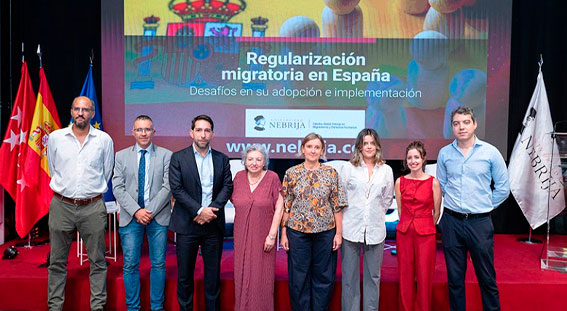
The Nebrija Global Chair in Migration and Human Rights organized the launch of two key works in the study of migration in Latin America: Nationals versus Foreigners in South America: 200 Years of Nationality and Migration Laws, by Professor Diego Acosta, and Decentering Migration Studies from Latin America, co-edited by Diego Acosta, Ana Paula Penchaszadeh, and Jacques Ramírez. The event brought together experts from several Latin American countries, including Argentina, Colombia, Ecuador, and Mexico, as well as students, for a discussion on the historical evolution and current challenges of migration governance in the region.
During his presentation, Acosta offered an overview of the legal construction of the foreigner in South America, emphasizing how the categories of national and foreigner have been shaped by political and historical decisions. He highlighted the coexistence of a tradition of openness to migration with exclusionary practices, as well as the recent role of regional integration — especially through Mercosur — in promoting more inclusive frameworks based on regularization and free movement.
South America, a pioneer in migration policies
Professor Deisy del Real (University of Southern California) emphasized the book’s contribution in positioning South America as a space for innovation in rights-based migration policies. She also highlighted the role of mid-level bureaucratic networks in disseminating and consolidating these reforms, even in adverse political contexts, underlining the importance of informal processes and regional cooperation.
The event also featured presentations by Ana María Moreno Sáchica, former advisor to the Colombian government on migration policy, Ana Paula Penchaszadeh (CONICET, Argentina), and Jacques Ramírez (University of Cuenca, Ecuador), who introduced the content of the book Decentering Migration Studies from Latin America and addressed, from different perspectives, the current challenges of human mobility in the region, with special attention to Venezuelan migration and the institutional responses developed in recent years.
The discussion was enriched by the active participation of students, whose questions focused on parallels with regularization processes in Spain, security concerns in migration policies, and the possible application of the Mercosur Residence Agreement and other regional integration instruments to the Venezuelan population.
Watch Video News: The Department of International Relations Presents Two Books Dedicated to Migration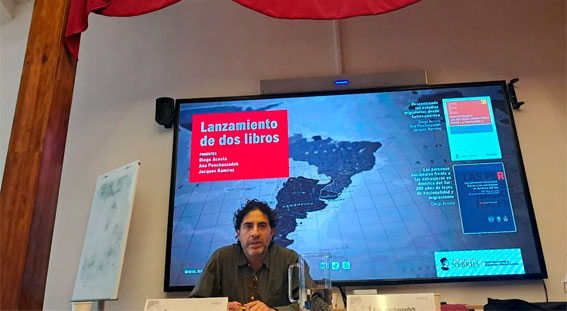
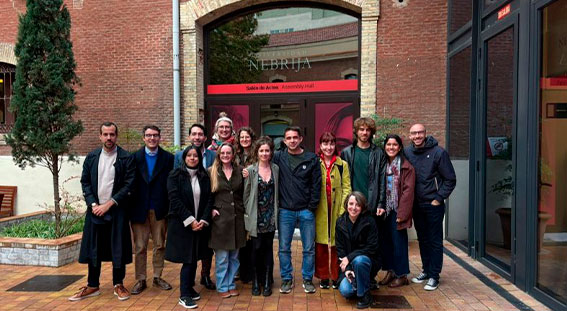
The event brought together researchers from different disciplines — including human rights, political science, and international law — specializing in migration studies, with the aim of creating a space for interdisciplinary dialogue on the possibilities of political impact from academia. Throughout the day, participants reflected on the challenges and opportunities for strengthening the connection between academic production and public policy-making, especially in contexts shaped by complex migration transformations in Latin America and Europe.
The meeting also served as a platform to discuss and provide feedback on the work developed by colleagues from various Latin American universities, promoting critical and collaborative exchange. Academics from Rey Juan Carlos University, Carlos III University of Madrid, Complutense University of Madrid, the CSIC, Autonomous University of Madrid, Universidad del Rosario (Colombia), the University of Zaragoza, and the CONICET Center participated in the event.
One of the main outcomes of the seminar was the consolidation of an academic network in Madrid focused on migration studies, aimed at strengthening interinstitutional collaboration, promoting joint projects, and enhancing the public impact of the knowledge produced. The institutional and disciplinary diversity enriched the debate and laid the groundwork for future cooperation initiatives between Europe and Latin America.
2025
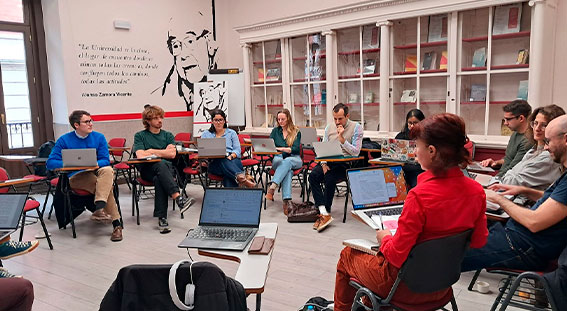
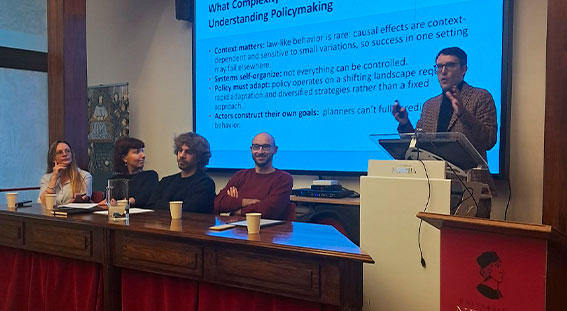
The Nebrija Global Chair in Migration and Human Rights organized the workshop “Migration and Complexity” on November 6 and 7 at Universidad Nebrija. The event brought together migration researchers from Europe and Latin America, with the support of the IMISCOE network (International Migration Research Network) and its representatives María Schiller and Sebastián Umpierrez de Reguero.
The main objective of the workshop was to discuss contributions for the preparation of a special issue of the journal Political Research Exchange, focused on the analysis of migration from the perspective of complexity theory, with particular attention to the challenges this approach poses for research and public policy-making.
News: Migration Researchers from Europe and Latin America Gather at Universidad NebrijaCollaborators:

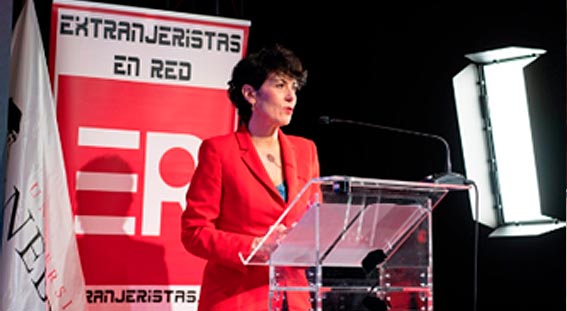
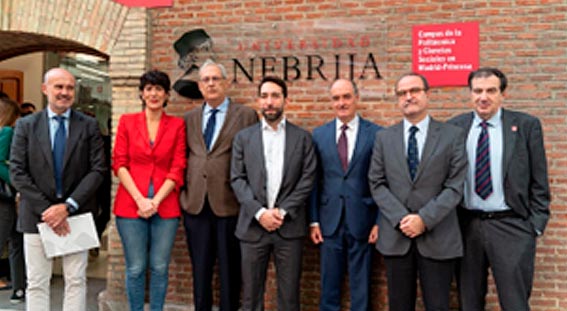
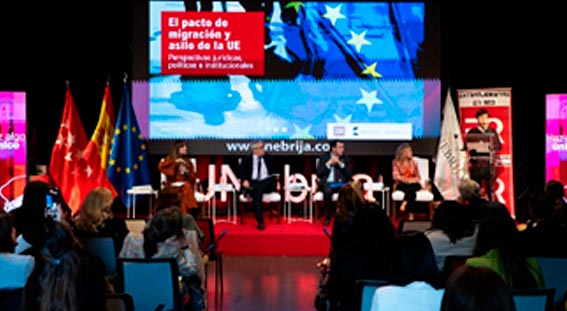
On Friday, October 24, 2025, the conference The EU Pact on Migration and Asylum: Legal, Political, and Institutional Perspectives was held in the Auditorium of Nebrija University’s Princesa Campus (Madrid). It was organized by the Nebrija Global Chair in Migration and Human Rights and the association of lawyers Extranjeristas en Red.
The event brought together leading experts from the academic, legal, and institutional spheres, as well as representatives from think tanks and civil society, creating a space for open dialogue on the challenges posed by the European Union’s new migration policy.
The conference was opened by the Minister of Inclusion, Social Security, and Migration, Her Excellency Elma Saiz Delgado, who emphasized the importance of academic debate surrounding the new Pact on Migration and Asylum, approved in 2024. This reform represents the European Union’s most ambitious change in border management, reception, and resettlement, with far-reaching legal, political, and institutional implications.
The event featured three discussion panels:
- Institutional and social analysis, with presentations by Dr. Carmen González Enríquez (Elcano Royal Institute) and Marie Trapet Llamas (ECRE - Brussels), moderated by Dr. Diego Acosta, Chair Director and Professor at the University of Bristol.
- Academic analysis, with contributions from Dr. Diego Ginés (Comillas Pontifical University, ICADE), Dr. David Fernández-Rojo (University of Deusto), and Dr. Luis García Segura (Nebrija University), moderated by Dr. Nieves Fernández Rodríguez, Professor of Political Science and Coordinator of the Chair.
- Practical analysis of the Pact, featuring Dr. Vladimir Núñez Herrera (University of La Laguna), Noemí Alarcón Velasco (Council of Bars and Law Societies of Europe, CCBE), and Marie Trapet Llamas (ECRE), moderated by Andrés Ceballos, President of Extranjeristas en Red.
Contributors:

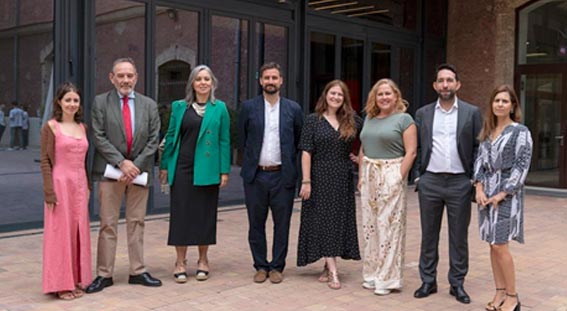
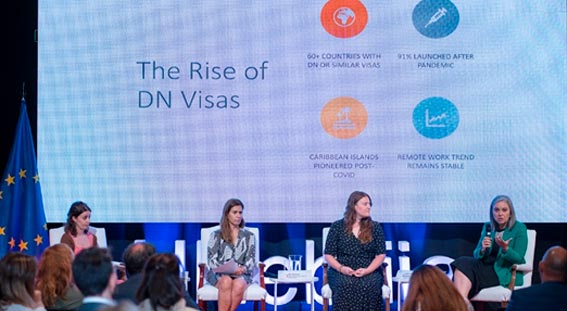
On September 10, the Nebrija Global Chair in Migration and Human Rights, in collaboration with Global Citizen Solutions, held the conference Global Mobility and Digital Nomadism in 2025.
The event brought together academics, policymakers, and professionals to reflect on the challenges and opportunities posed by digital nomadism in the current global climate. Through a series of presentations and debates, participants examined emerging legal frameworks and global mobility policies, as well as the implications of digital nomadism for citizenship, identity, and international talent management.
Watch Video Article: Spain is the world’s most attractive destination for international digital nomadsContributors:


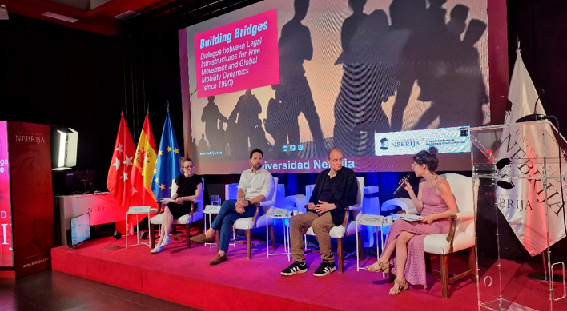
On 26 and 27 June, an international academic meeting was held, organized by the Nebrija Global Chair in Migration and Human Rights, in collaboration with the MIGMOBS and Free Move research projects.
The event brought together experts from Europe and Latin America to discuss the legal frameworks governing freedom of movement and the contemporary dynamics of human mobility, creating a space for transdisciplinary dialogue and knowledge exchange.
Watch Video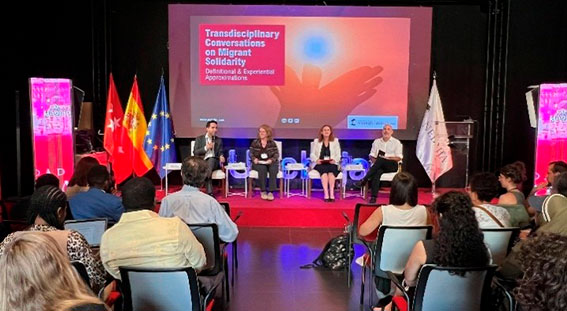
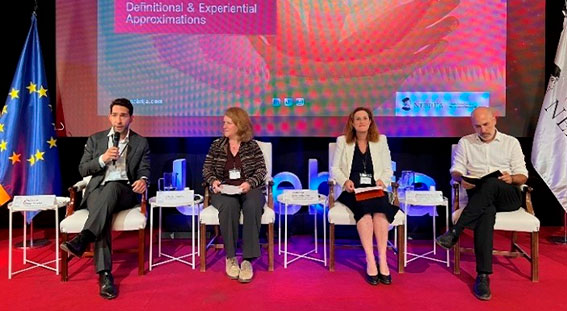
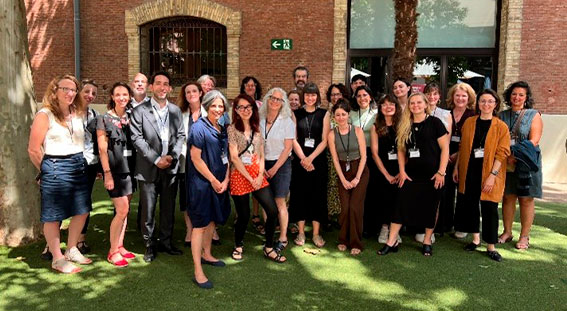
On June 2 and 3, 2025, the international workshop Transdisciplinary Conversations on Migrant Solidarity: Definitional & Experiential Approximations was held in Madrid. This initiative brought together scholars and activists to critically examine the role of solidarity within the context of migration.
Organized by the Nebrija Chair in Migration and Human Rights, in collaboration with institutions such as The New School, Temple Law School, ICREA–Universitat de Barcelona, the Hertie School, and the (B)OrderS Centre, the workshop proposed a transdisciplinary approach to analyzing the challenges, paradoxes, and possibilities that solidarity presents when mobilized as a response to human mobility.
In addition to five thematic panels, the workshop featured a keynote roundtable discussion, The Challenge of Migrant Solidarity(ies), with contributions from Professor Cecilia Bailliet (UN Independent Expert on Human Rights and International Solidarity), Professor Pablo Ceriani (Vice-Chair of the UN Committee on the Protection of the Rights of All Migrant Workers and Members of Their Families), and Michèle LeVoy (Director of PICUM).
The discussion, moderated by our director Diego Acosta, explored the limits and potential of solidarity as a tool for advancing migrant rights.
More information Video on Youtube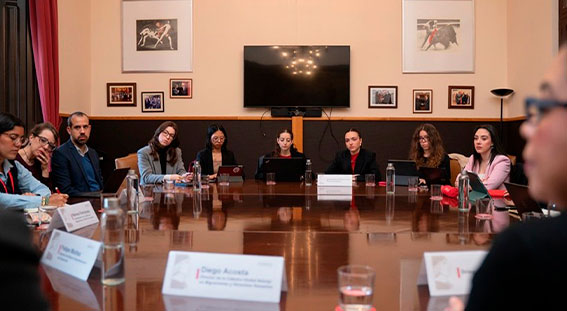
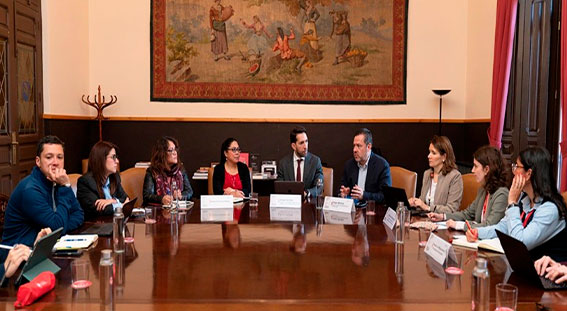
On April 23, the Chair of Migration and Human Rights hosted a roundtable focused on circular migration policies, with particular attention to the bilateral project between Guatemala and the Government of Spain in the agricultural sector.
The event featured the distinguished participation of Felipe Muñoz, Director of the Migration Unit at the Inter-American Development Bank (IDB), and Claudia Nineth Peneleu, Vice Minister of Social Security and Employment at the Guatemalan Ministry of Labor, who were visiting Spain as part of the project’s supervision.
During the session, International Relations students engaged the speakers with questions about the protection of labor rights, the cultural challenges of migration, and the use of remittances as investment tools, fostering a rich and thought-provoking dialogue. The event reaffirmed the Chair's commitment to critical reflection and to strengthening the connection between academic research and public policy on migration.
More information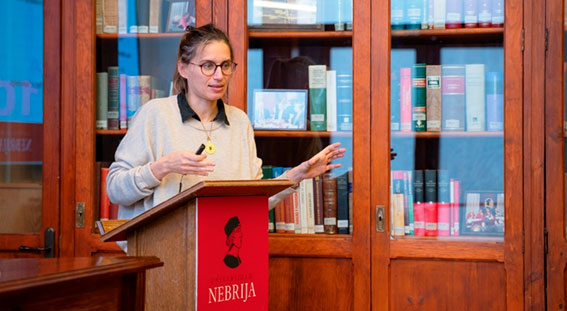
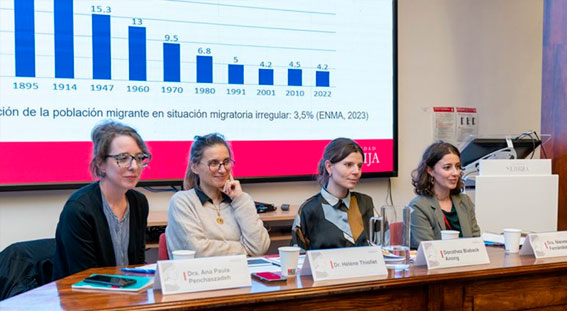

On Tuesday, March 26, the Nebrija Chair on Migration and Human Rights hosted a conference titled "Global Migration Governance: Regional Approaches and Emerging Paradigms." The event featured three distinguished migration experts, currently visiting researchers at the Chair: Dr. Ana Paula Penchaszadeh (CONICET), Dr. Hélène Thiollet (Sciences Po), and Dorothea Biaback Anong (Humboldt University).
During the conference, the speakers provided an in-depth analysis of contemporary migration governance at the international, regional, and national levels. By presenting their research and sharing comparative insights, they fostered a rich discussion on current challenges and emerging opportunities in migration policy.
More information2024
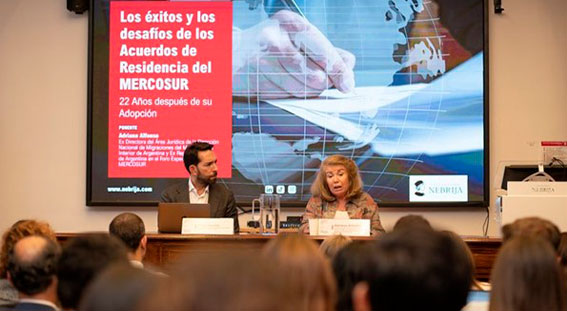
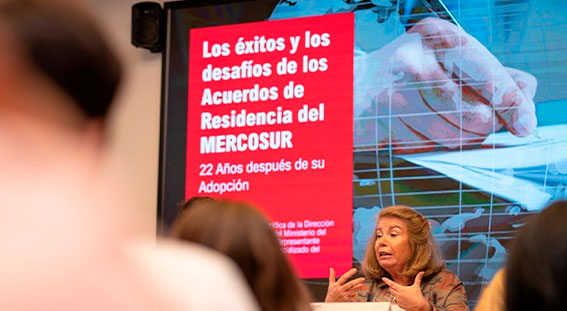
Last Wednesday, September 25, the Nebrija Global Chair on Migration and Human Rights had the honor of hosting Dr. Adriana Alfonso, a key figure in the negotiation and drafting of the MERCOSUR Residence Agreements in 2002.
During the event, Dr. Alfonso shared her extensive experience and knowledge of these agreements, which have benefited more than 3.6 million South Americans. She conducted a thorough analysis of the achievements and current challenges facing these agreements, 22 years after their adoption.
More information Recording of the event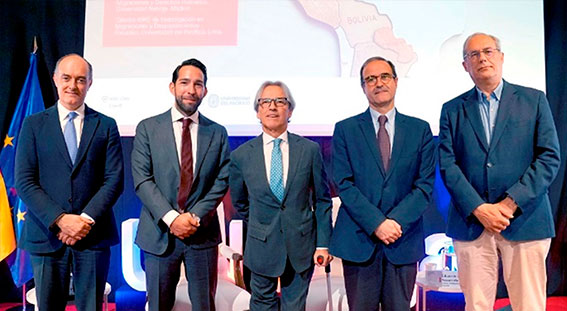
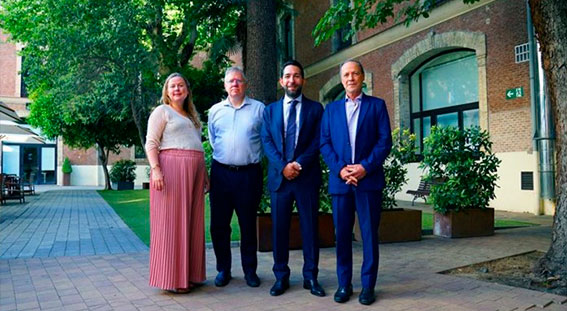
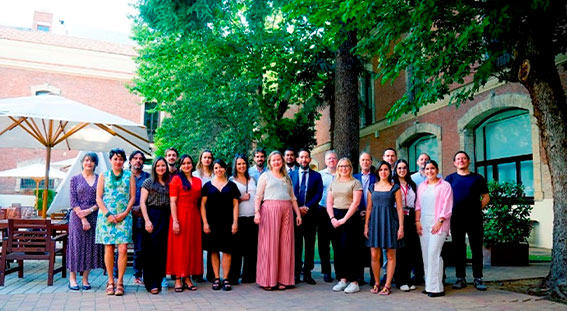
On July 4 and 5, 2024, the Nebrija Global Chair of Migration and Human Rights, under the direction of Professor Diego Acosta, in collaboration with the IDRC Chair of Research in Migration and Forced Displacements of the Universidad del Pacífico in Lima, directed by Professor Luisa Feline Freier, held the Conference on Mobility and Migrations in Latin America. During this event, a select group of experts on international migration in Latin America met to analyze the challenges facing current empirical developments and the theoretical contributions that academic analysis can offer in this area.
The opening of the conference was given by the Hon. Ambassador of Colombia to Spain, Mr. Eduardo Ávila Navarrete. Afterwards there were two panels with special speakers. In the first on July 4, Jennifer Gordon, Professor of Law at Fordham University in New York, and Rubén Giustiniani participated. In the second special panel, held on July 5, Andrew Seele, President of the Migration Policy Institute (MPI) of Washington, presented.
More information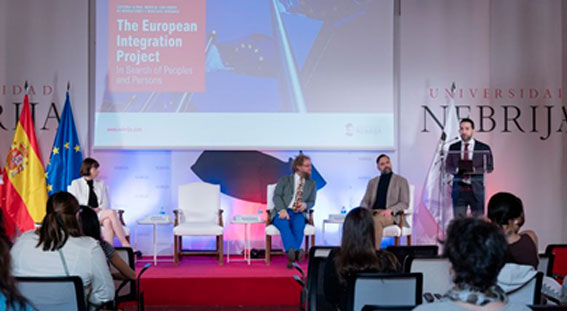

On March 22, the Nebrija Global Chair on Migration and Human Rights, under the leadership of Professor Diego Acosta, convened a meeting with Dimitry Kochenov, a professor at the CEU Democracy Institute in Budapest and a visiting professor at the University of Chicago; Sarah Ganty, a postdoctoral fellow at the Center for Human Rights at Ghent University and a visiting professor at the Central European University in Vienna; and Jacopo Martire, a Professor of Law at the University of Bristol. They shared their perspectives on how the European Union shapes the identities of both European citizens and individuals from third countries through its legal framework.
More information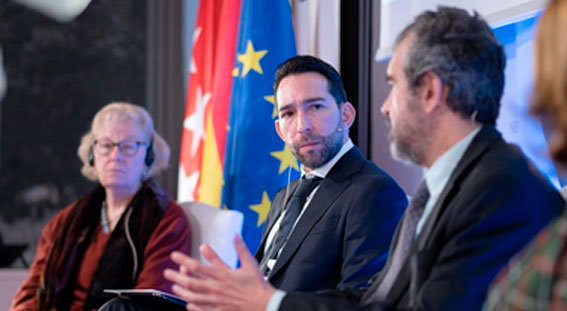
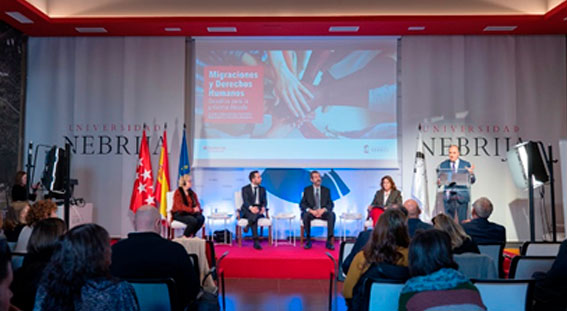
On February 2, the Nebrija Global Chair on Migration and Human Rights was officially introduced. This new initiative is led by Diego Acosta, a professor specializing in European and Migration Law at the University of Bristol.
The newly established Chair, which held its inaugural event at the Madrid-Princesa Campus, welcomed the participation of several distinguished individuals. These included Felipe González Morales, a former United Nations Special Rapporteur on the Rights of Migrants (2017-2023) and a professor at Diego Portales University in Santiago de Chile; Elspeth Guild, a Professor of Law at Queen Mary University in London and Professor Jean Monnet ad personam; and María Jesús Herrera, the Head of the Spanish Mission of the International Organization for Migration (IOM).
More information Presentation video