
Bachelor’s Degree in Philosophy, Politics and Economics

Master the Forces That Shape the World
In a global landscape defined by complexity and rapid change, one-dimensional solutions are no longer sufficient. The most pressing challenges of our time, ranging from social inequality to environmental sustainability and global governance, require a deep and multidimensional understanding. Against this backdrop, the strategic convergence of Philosophy, Politics, and Economics (PPE) emerges as a core educational framework for those who will shape the future.
This innovative degree is designed to unravel the interconnected forces that shape contemporary societies, offering a distinctive perspective for interpreting reality in all its depth. Philosophy serves as the foundation of this approach, providing essential intellectual tools for rigorous conceptual analysis, sound logical reasoning, and in-depth ethical reflection.
Politics complements this foundation by examining the mechanisms through which power is exercised, collective decisions are made, and social life is organized. This discipline enables students to understand institutional structures, negotiation processes, and the dynamics of governance at both local and global levels. Studying politics involves understanding how ideas and values are transformed into concrete frameworks for action and viable public policies that influence the lives of millions.
Economics adds analytical rigor and an empirical framework for assessing resources, incentives, and the material consequences of collective decisions. It introduces the language of efficiency, productivity, and distribution, making it possible to quantify challenges, project scenarios, and assess the tangible impact of initiatives. From this perspective, future-oriented proposals are grounded in practical feasibility and long-term sustainability.
Discover the Polytechnic and Social Sciences Campus in Madrid-Princesa
Why study the Bachelor's Degree in Philosophy, Politics and Economics

Diploma in Business Analytics
To strengthen their professional profile, students complement their Bachelor’s degree with a Diploma in Business Analytics, specializing in data analysis and its direct application to the business world.

With Leading Professionals
The Ministry of the Interior, the Ministry of Defense, the Juan March Foundation, the Elcano Royal Institute Foundation, and the Planeta are among the partners of this degree. Their involvement supports the academic program and provides students with professional internship opportunities.

100% English-Taught Bachelor’s Degree
Study your degree entirely in English and prepare to communicate, lead, and make decisions in the language that shapes global business and international leadership.
Curriculum
Our curriculum has been developed in accordance with current legislative guidelines and has been verified by the National Agency for Quality Assessment and Accreditation.
Students must complete 240 ECTS credits
First Year 60 ECTS
First Semester 30 ECTS- 6 ECTS | Fundamentals of Economics
- 6 ECTS | Introduction to Law
- 6 ECTS | Oral and Written Communication
- 6 ECTS | Contemporary History
- 6 ECTS | Mathematics for Data Analytics
Second Semester 30 ECTS- 6 ECTS | Economic History
- 6 ECTS | Anthropology of Human Behavior
- 6 ECTS | Theory of Society
- 6 ECTS | Comparative Political Systems
- 6 ECTS | Data Engineering
Second Year 60 ECTS
First Semester 30 ECTS- 6 ECTS | Political Science
- 6 ECTS | International Scenarios
- 6 ECTS | Cultural Anthropology
- 6 ECTS | International Business
- 6 ECTS | History of Political and Philosophical Thought
Second Semester 30 ECTS- 6 ECTS | Logic and Decision-Making
- 6 ECTS | Microeconomics I
- 6 ECTS | Macroeconomics I
- 6 ECTS | International Economic Organization
- 6 ECTS | Research Methodology in the Social Sciences
Third Year 60 ECTS
First Semester 30 ECTS- 6 ECTS | Social Philosophy
- 6 ECTS | Public Affairs
- 6 ECTS | Microeconomics II
- 6 ECTS | Qualitative Research Techniques in the Social Sciences
- 6 ECTS | Project Organization and Management
Second Semester 30 ECTS- 6 ECTS | Governance and International Organizations
- 6 ECTS | Sustainability and Circular Economy
- 6 ECTS | Macroeconomics II
- 6 ECTS | Game Theory Applied to Political Analysis
- 6 ECTS | Quantitative Research Techniques in the Social Sciences
Fourth Year 60 ECTS
First Semester 30 ECTS- 6 ECTS | Ethics and Social Responsibility
- 6 ECTS | Institutional Communication and Political Marketing
- 6 ECTS | Public Sector and Welfare Economics
- 6 ECTS | Public Policy Evaluation
- 6 ECTS | Artificial Intelligence Applied to the Social Sciences
Second Semester 30 ECTS- 6 ECTS | International Economic Policy
- 6 ECTS | Intelligence and Cybersecurity
- 6 ECTS | External Academic Internship I
- 6 ECTS | Choose one of the following:
- Professional Academic Internship II
- Developing a Spirit of Participation and Solidarity - 6 ECTS | Final Degree Project
More information on these subjects
This program aims to enhance students' practical training under the continuous supervision of the University's Degrees Services Department, the academic department corresponding to the degree program, and the collaborating company or institution where the internships take place. Students receive guidance in choosing internships, and ongoing support and mentoring are provided, always taking into account each student's career aspirations.
Nebrija University plays a vital role in promoting practical training for all its students and facilitating graduates' entry into the workforce. All of its Creation, Business, and Technology programs require at least one internship as an integral part of their curriculum. These internships are selected based on each student's career aspirations, ensuring invaluable real-world experience and enhancing their future career prospects.
More information about internships in companies Listado de empresas e instituciones donde los alumnos del grado han realizado prácticas bajo convenio de cooperación educativaThis work involves students developing research tasks and studying various subjects under the guidance of one or more professors from the Department and, occasionally, professionals from the business world. Students have the option of choosing one project from those offered.
Nebrija University, which is committed to languages and quality, provides the student with added value with the Diploma in English Professional Communication, which will allow him/her to achieve with confidence the competence demanded to successfully join the labor market.
It corresponds to level C1.
More information hereMore Academic Information
Official Degree:Bachelor's Degree in Philosophy, Politics and Economics
The recommended entry profile for the Bachelor’s Degree in Philosophy, Politics, and Economics is that of a student with a strong interest in understanding the philosophical foundations, political dynamics, and economic principles that shape modern societies. This profile includes:
▪ Broad intellectual interests:curiosity about social, political, ethical, and economic issues.
▪ Analytical and critical thinking skills: the ability to reason logically, analyze complex texts, construct arguments, and evaluate different perspectives.
▪ Communication skills: strong oral and written expression in one or more languages. A good level of English is typically required in international programs.
▪ Basic quantitative skills: an understanding of mathematical and statistical concepts, as economics and some areas of political science require numerical reasoning.
▪ Social and ethical commitment: sensitivity to contemporary social challenges and a motivation to contribute to informed public debate.
▪ Aptitude for logical and abstract reasoning: particularly relevant in the study of philosophy and economics.
▪ Interest in interdisciplinary work: as PPE combines three disciplines, intellectual flexibility and curiosity about connecting different approaches are essential.
▪ Language proficiency: many programs are taught partially or entirely in English, or require reading comprehension in other languages.
▪ Autonomy and responsibility: the ability to work independently and manage time and learning effectively.
- Classroom attendance: 50
- Online: 50
240 ECTS credits.
Minimum 12 ECTS and maximum 90 ECTS per registration and academic period
Center responsible:
Branch of knowledge: Social and Legal Sciences
Type of Education: Classroom attendance / Online
- Interdisciplinary understanding: developing an integrated perspective on philosophy, politics, and economics, and understanding how these disciplines interact to shape social and power structures.
- Development of critical and analytical thinking: fostering the ability to think critically, evaluate arguments, identify underlying assumptions, and analyze problems from multiple perspectives.
- Application of logical and ethical reasoning to social and political issues.
- Knowledge of political and economic systems: understanding the main political and economic models, their theoretical foundations, and their practical applications, including the analysis of global phenomena such as governance, inequality, international trade, and social justice.
- Competence in quantitative and qualitative methods: acquiring skills in statistical, economic, and philosophical analysis that enable the interpretation of data and the construction of well-founded arguments.
- Communication and argumentation skills: expressing ideas clearly, persuasively, and in a structured manner, both orally and in writing, and participating in complex debates with academic rigor.
- Ethical education and social responsibility: promoting a reflective approach to ethical values, justice, public responsibility, and the social impact of decision-making.
- K1. Become familiar with the fundamental elements that define the relationship between philosophy, politics, and economics in social life, understanding their multidisciplinary implications and mastering their specific terminology.
- K2. Understand the nature and evolution of the elements, processes, dynamics, and actors observable in society as a result of interactions between ideological, political, and economic components.
- K3. Understand the main types of international relations, including conflict, cooperation, and integration, as well as the elements, channels, instruments, and actors specific to each.
- K4. Recognize the different economic and geopolitical areas of influence within the international system, identifying their constituent elements and the specific dynamics of cooperation and conflict present in each.
- K5. Understand key interpretations of human behavior in political and economic life throughout history, describing the anthropological and psychological dimensions that shape individual and collective decision-making.
- K6. Understand the main dynamics of the relationship between public and private spheres and interests in economic and political life, as well as the principal methods used to measure their impact.
- K7. Understand economic structures, historical transformations, the functioning of different political systems, public opinion systems, treaties and legal frameworks, and the characteristics of different civilizations and religions, together with the factors that influence the development of the international economic and political order.
- K8. Understand human rights and the legal system, as well as the existing instruments for their protection and their contribution to social coexistence.
- K9. Understand the dynamics that characterize international security, its relationship with state politics, and the instruments and strategies used for its management.
- K10. Describe the microeconomic and macroeconomic factors that shape the economic environment and international business.
- K11. Understand the theoretical and practical foundations of mathematical, statistical, and econometric models and techniques used in real-world socioeconomic and political studies.
- K12. Understand the operation of the most commonly used programming languages in the context of data analysis.
- K13. Identify the differences between basic machine learning techniques and understand their applications in political decision-making.
- K14. Understand the importance of emotional intelligence in personal and interpersonal effectiveness.
- S1. Identify the factors that influence decision-making in social, economic, and political contexts in specific situations.
- S2. Critically apply international legal frameworks in the analysis and decision-making of political and economic issues.
- S3. Apply theories of sociocultural diversity to the analysis of different processes of intercultural relations.
- S4. Analyze crisis situations and address complex problems using analytical and strategic approaches.
- S5. Analyze and evaluate information systematically and objectively in order to reach valid and well-founded conclusions.
- S6. Conceive, plan, and implement proposals and projects related to different aspects of global scenarios.
- S7. Develop arguments for decision-making based on the analysis and identification of the various factors involved.
- S8. Identify and evaluate emerging trends and drivers of change in socioeconomic and political contexts.
- S9. Interpret the results of econometric and time-series models for predictive purposes within the socioeconomic and political sphere.
- S10. Produce effective reports for data-driven decision-making.
- S11. Use artificial intelligence techniques to solve predictive problems within socioeconomic and political analysis.
- C1. Learn independently in the field of relationships between philosophy, politics, and economics; search for and select information effectively; and correctly apply acquired theoretical and methodological knowledge, communicating it appropriately.
- C2. Communicate effectively both orally and in writing, presenting in public and arguing in a clear and structured manner from different perspectives, and adapting discourse to the audience.
- C3. Adapt effectively to changes arising from an increasingly complex global context.
- C4. Act ethically and with professional responsibility in response to social, environmental, and economic challenges, committing to the values, principles, and rights recognized by the international community, guided by democratic values and the Sustainable Development Goals.
- C5. Organize, coordinate, manage, and communicate projects at national, multinational, and transnational levels, establishing positive interpersonal relationships that contribute to professional effectiveness.
- C6. Work effectively within systems, networks, and teams, including interdisciplinary and multicultural contexts, constructively addressing potential disagreements and contributing to the achievement of results.
- C7. Respect, promote, and design the development and implementation of solutions that respond to social demands, taking the Sustainable Development Goals, respect for diversity, principles of universal accessibility, and design for all as reference points.
- C8. In professional practice, use appropriate quantitative tools and instruments to obtain, diagnose, and analyze business information within economic, social, and political contexts.
- C9. Integrate the knowledge acquired throughout the degree program and demonstrate an understanding of theoretical and practical aspects relevant to real-world problems in the socioeconomic and political spheres.
- C10. Operate effectively in situations that require the development of new solutions articulated through the processing of large volumes of data in professional contexts.
- C11. Identify personal training needs for successful professional development and organize one’s own learning with a high degree of autonomy across different contexts.
- C12. Design qualitative research to understand social, political, and economic phenomena from an interpretive and critical perspective.
- C13. Develop quantitative research that, through the analysis of relationships between variables, supports empirical arguments in the study of social, political, and economic phenomena.
Methodology
Classroom attendance and Online
Awards to Global Campus Nebrija


Access and Admission
Admission Criteria
At Antonio de Nebrija University, admission procedures are carried out in accordance with university legislation, with particular reference to the guiding principles governing access to Spanish universities: equality, merit, ability, universal accessibility, and alignment with the criteria of the European Higher Education Area.
The admission process consists of several phases, as outlined below:
1.- Submission of Documentation
All applicants wishing to apply for admission must submit the following documentation:
- 1. Completed and signed admission application form.
- 2. Proof of payment of registration fees.
- 3. Photocopy of the National Identity Document (both sides) or passport.
- 4. Two passport-size photographs.
- 5. Although not mandatory, a letter of recommendation from a teacher or tutor at the applicant’s previous institution is recommended. This letter should accompany the academic documentation submitted with the application.
In addition, depending on the applicant’s route of access to the Bachelor’s degree, the following documentation may be required:
- 6. High school academic transcript or certificate.
- 7. University Entrance Examination administered by Nebrija University.
- 8. Credential granting access to Spanish universities issued by the UNED (National University of Distance Education), for students from the International Baccalaureate or holding a Baccalaureate qualification from the European Union.
- 9. Specific University Entrance Examination (PAU) for international students.
- 10. For candidates holding a university degree or an Advanced Vocational Training qualification, the academic transcript of the completed qualification.
- 11. For students transferring from another institution, an academic transcript of completed courses and the official course syllabi for each subject passed.
Only applications from students who have submitted the required documentation within the deadlines established by the Admissions Department will be processed. In addition, applicants may be asked to provide any further information deemed necessary to assess their suitability for admission to the Bachelor’s degree program.
For pre-admission and admission purposes, the candidate’s evaluation will be carried out on a scale from 0 to 10 points, taking into account the following criteria and percentages:
- 1. Academic transcript or certificate from the student’s previous educational pathway: 60%
- 2. Multiple-choice psychometric test: 10%
This test consists of an assessment of competencies and skills related to intellectual work, attitudes towards cooperation and teamwork, and time and resource management. The aim is to determine whether the candidate possesses sufficient motivation, education and knowledge, skills, aptitudes, communication abilities, extracurricular involvement, and future interests to be admitted as a student of the Bachelor’s Degree in Economics and International Business at Antonio de Nebrija University.
- 3.- English language proficiency test: 10%
In order to determine students’ actual level of English proficiency, the Department of Modern Languages will administer a placement test at the beginning of the program.
The English placement test consists of a 60-minute written examination with multiple-choice questions, assessing listening comprehension, reading comprehension, and language use. The test is administered either in person or online in computer labs at each campus, by instructors from the Institute of Modern Languages. Based on the results, students will be placed at the appropriate level. The minimum level at which students may begin their studies is B1.
Students who choose to take courses taught in English must achieve a B2 level in the placement test in order for English to serve as the language of instruction for their academic program and to ensure they can acquire the competencies associated with each course. Students who do not meet this requirement will be required to take courses taught in Spanish.
Candidates who submit documentation certifying their English proficiency level will not be required to take the placement test. Accreditation of the level will be validated through official qualifications included in the ACLES table of accepted certificates (http://www.acles.es) and will also be reviewed by the Institute of Modern Languages.
- 4.- Specific knowledge test for the Bachelor’s Degree in Economics and International Business: 20%. This multiple-choice test focuses primarily on specific content from some of the main areas of general knowledge covered in the degree program chosen by the candidate, as well as on elements common to all degree programs.
- 5.- Personal interview: As a strategy to understand applicants’ characteristics, the Psychopedagogical Guidance Department will administer a personality test to all candidates as a diagnostic tool. This test explores the emotional, intellectual, social, and values-based dimensions of each applicant to the Bachelor’s Degree in Economics and International Business at Antonio de Nebrija University.
Where an applicant presents clinical indicators, an in-depth interview will be conducted with psychologists from the Psychopedagogical Guidance Department. Where appropriate, the applicant may be referred for clinical assessment by faculty specialists in Psychiatry and or Clinical Psychology.
All tests and student academic records will be evaluated and assessed by the Undergraduate Admissions Committee, taking into account the criteria set out in the document “PGA_11 Procedure for the Operation of the Undergraduate Admissions Committee”, which forms part of the Internal Regulations governing access to the University.
Employability
This degree does not grant access to any regulated profession.
The graduate profile of the Bachelor’s Degree in Philosophy, Politics, and Economics (PPE) is highly versatile and designed to train professionals with a critical, analytical, and global perspective on the main social, political, and economic challenges of today’s world.
Among the key competencies of this profile, the following may be highlighted:
- Critical and analytical thinking
- Ability to analyze complex problems from different perspectives.
- Rigorous evaluation of ethical, political, and economic arguments.
- Interdisciplinary knowledge
- Understanding of the connections between philosophical theories, political institutions, and economic systems.
- Ability to apply theoretical knowledge to real-world problems.
- Communication skills
- Excellence in oral and written expression.
- Ability to argue logically and persuasively.
- Leadership and decision-making skills
- Preparedness to participate in public or private decision-making contexts.
- Ability to lead projects with social or political impact.
- Ethical sensitivity and social commitment
- Training in values and contemporary moral dilemmas.
- Focus on justice, equity, and collective well-being.
Career Opportunities
- Political or economic consulting
- Public service or international organizations (UN, EU, OECD)
- Think tanks and research centers
- Political and economic journalism
- Non-governmental organizations
- University teaching and research
- Public policy management
- Social impact entrepreneurship
Internships
These are some of the companies and institutions where students can complete their professional internships:
Más Información de Prácticas en EmpresasInternational
The International Mobility Office of Nebrija University makes a constant effort to monitor the agreements with the most prestigious universities.
NOTA: The destination universities, offered by degree, may vary according to the International Mobility Program. For more information, students can consult the information online in the. International Mobility Program.
* Erasmus scholarships are not available for Switzerland, but to date, other scholarships have been awarded by the host university. Consult the IMO for more information.
Your Bachelor’s Degree in Philosophy, Politics and Economics
Visit all the Activities of the Faculty
Young Entrepreneurs
Pre-university students have the opportunity to demonstrate their entrepreneurial skills, creativity, organizational abilities, and enthusiasm by defining and conceptualizing a business creation project. Conceiving an idea, developing a business plan, evaluating investment alternatives, and defending it before a panel of experts are some of the challenges that participants have overcome in previous editions of this award. The main objective of this event, now in its 27th year, is to promote an entrepreneurial culture and entrepreneurship among Spanish high school and vocational training students.
Graduation Ceremony, Faculty of Economics and Business | Class of 2025
The Graduation Ceremonies for the Class of 2025 were held on June 19, 20, and 21. These are the most important academic events for Nebrija University, as it is a great source of satisfaction to see students successfully complete this stage of their education.
IMPULSA I. Nebrija Employment Event
Event in which Nebrija talent connects with companies, organized by Nebrija Alumni and Professional Careers department.
Opening ceremony of the academic year
Opening Ceremony of the academic year at the Madrid-Princesa Campus of Nebrija University
International Entrepreneurship Week
Click expand
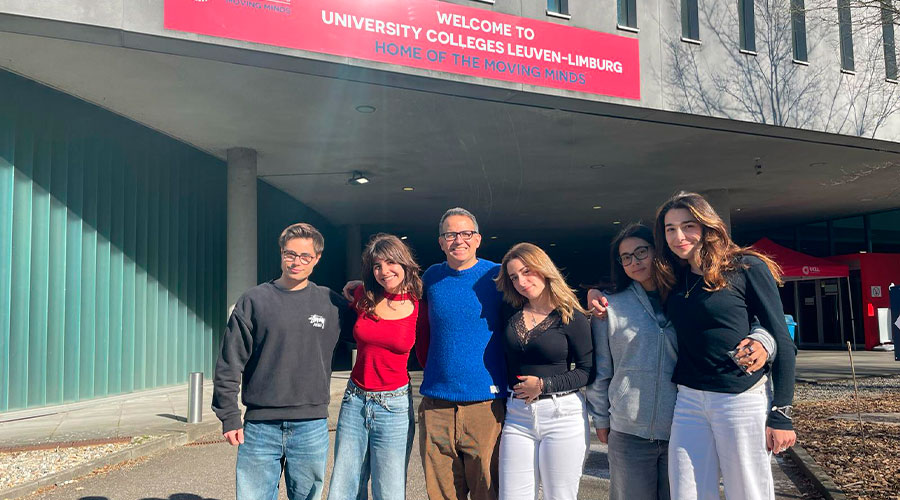
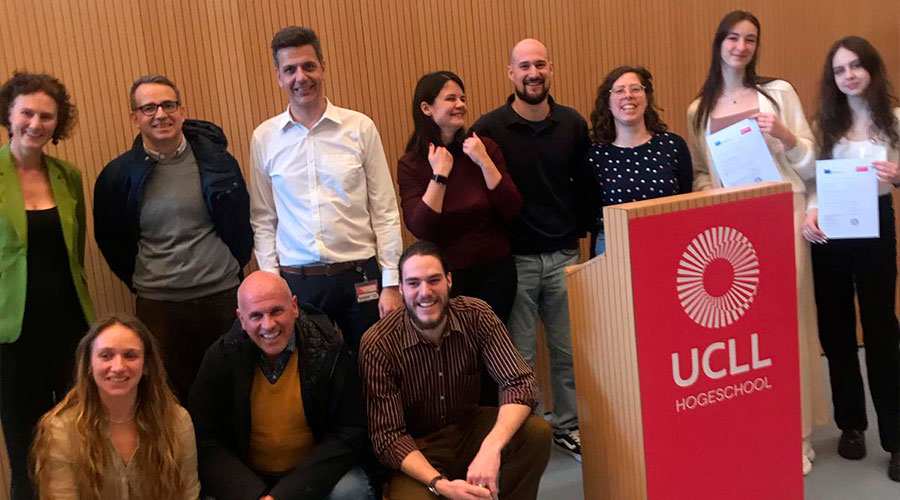
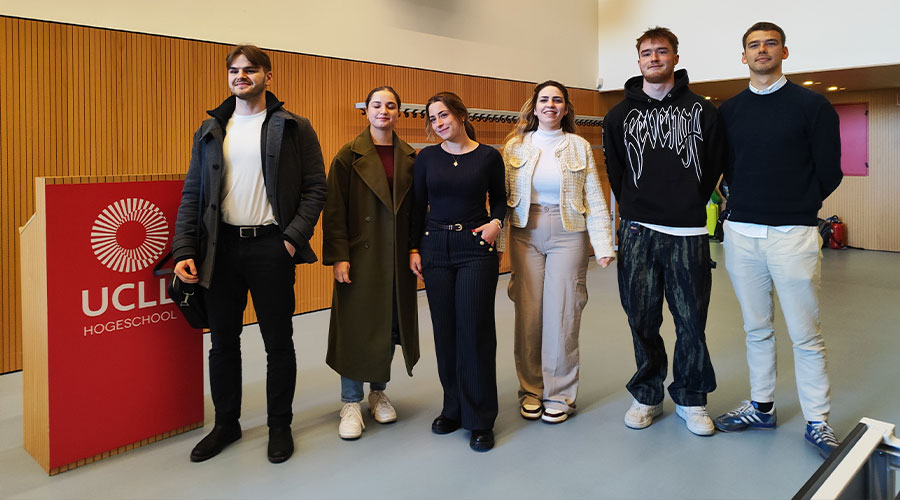
The School of Economics and Business participated in the International Entrepreneurship Week at University College Leuven-Limburg (UCLL) in Leuven, Belgium. Representing Nebrija University were students Mireya Hernández Pérez, Irene de la Rosa Ceballos, Tobias Held, Lucia D'Antonio Fernández, and Lidia Alarcón Santos. As in the previous academic year, Nebrija was once again among the winners of the International Week. This year, participants worked on a real-life case study: developing a social media strategy for the Belgian clothing company Cosh.
Universities from Belgium, the United Kingdom, France, Ukraine, Germany, Italy, and Romania also took part in the competition. The students were accompanied by Professor Jorge Hernando from the School of Economics and Business. Congratulations to our students for their outstanding performance in this competition.